
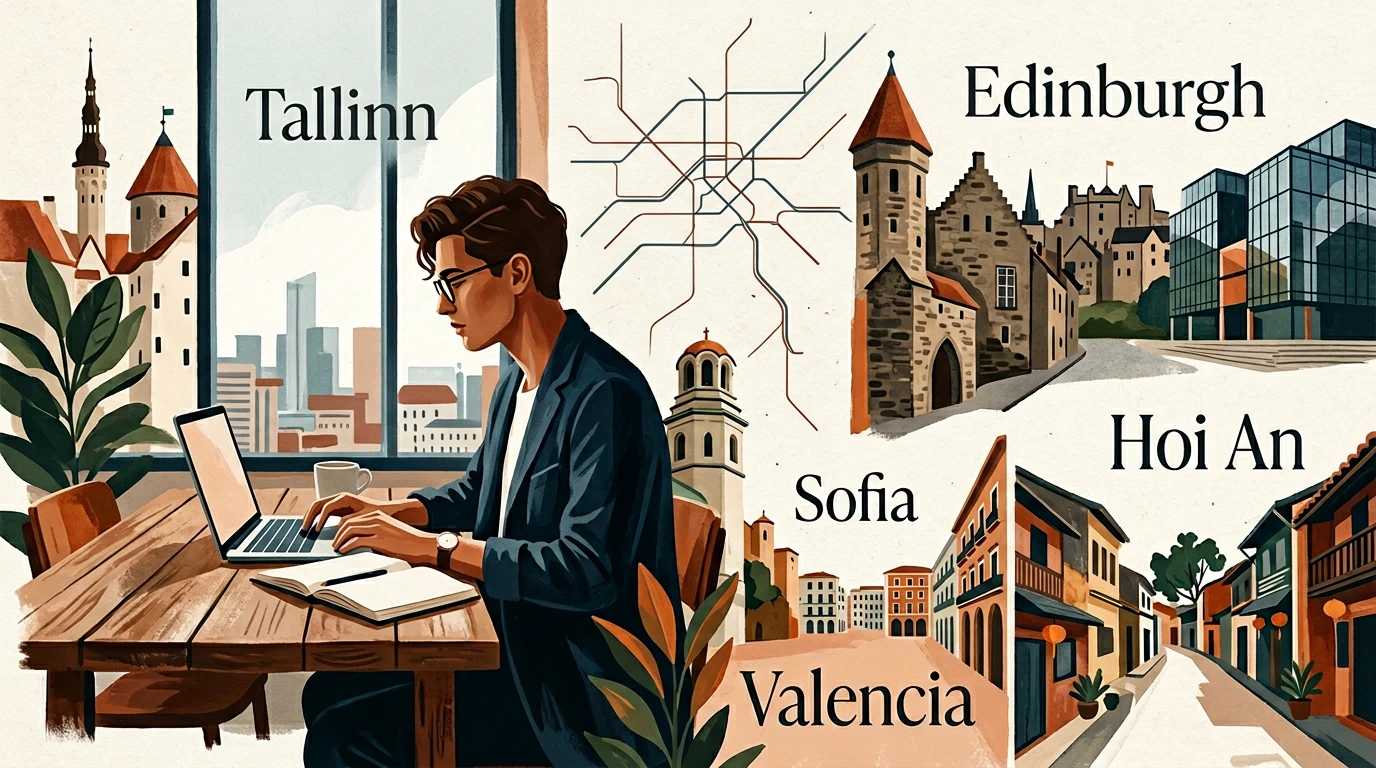
The Best Cities for Remote Workers in 2026
Remote work is a lifestyle, not just a trend. Digital nomadism in 2026 continues its upward growth of recent years, with flexible work lifestyles and fully remote companies still on the rise, improved digital infrastructure in many nomad hubs, and post pandemic mindset shifts driving the push towards this modern way of living. It’s no longer a discussion, rather a fact, that this way of life provides much sought after flexibility, freedom and cultural diversity, with more and more countries providing easier ways to transition by introducing digital nomad visas.
It’s no surprise that hundreds of thousands of people are ogling this lifestyle with envy, dreaming of making the leap to becoming a digital nomad. Perhaps that’s you. Or perhaps you already are a nomad, but are looking for the next place to call home for a while. Whilst Asia and Africa can offer lower living costs, Europe can also provide everything that a nomadic traveller could want, with good infrastructure, food and healthcare, being a characteristic of most countries in the continent, making it a perfect place for nomads to explore.
This article aims to explore the best cities for digital nomads in 2026 based on connectivity, cost of living, lifestyle and opportunities for remote professionals.
What digital nomads are seeking in 2026
There are a few factors that affect the choices of a modern digital nomad, which have evolved significantly from what was once prioritised. In 2026, remote workers are no longer just looking for short-term travel experiences; they are searching for cities that support long-term, sustainable living.
Key priorities now include reliable high-speed internet access, good value co-working spaces, affordable accommodation and strong, international communities. Many digital nomads also value countries that offer visas specifically for digital nomads and flexible stay options, meaning that nomads can extend their stay as they choose and move through the process quite easily. Safety and lifestyle factors also play a huge role with nomads wanting the places they choose to call home to be safe, offer a good standard of healthcare and offer cultural experiences that they will remember for a lifetime.
Tallinn, Estonia: Europe’s Digital Pioneer
Tallinn is not always the place that immediately springs to mind when thinking of destinations for digital nomads, but it is one of the most forward-thinking cities in Europe. Offering digital nomad visas, visitors are able to work in Estonia for up to 12 months remotely, provided they have an income of over €4,500 per month. However, they may not work for Estonian companies. Alongside this, Tallinn is known for its fast internet and its standing as a technological pioneer, making it perfect for digital nomads.
When it comes to lifestyle, Tallinn is no longer the bargain it once was, but it remains relatively good value compared to many Western European capitals, especially outside the Old Town. Rents and everyday expenses have risen noticeably in recent years, and platforms like NomadList now estimate monthly living costs at around €2500 per person. While no longer “cheap,” Tallinn’s strong safety record, solid infrastructure, and high quality of life continue to make it an attractive base for digital nomads.
Pros
- Digital nomad visa
- Great connectivity
- Safety factor
Cons
- Shorter stay with restrictions
- Cold dark winters
- Lacking the “vibe” for some nomads
Edinburgh, Scotland: Historical Haven
Although it’s not a city that is on many nomads’ next-destination lists, Edinburgh in Scotland is a quietly growing digital nomad hub, due to its charm, walkability and reliable infrastructure. Whilst the UK does not yet offer a dedicated digital nomad visa, most nomads from overseas tend to opt for the standard visitor visa for short stays or even the skilled worker visa that allows nomads to stay for up to 5 years and can lead to gaining British citizenship after the 5 years are up.
Edinburgh offers an incredible work-life balance, combining historic charm with a modern tech ecosystem. With the city’s fast and reliable internet, you will never struggle finding WIFI or finding a co-working space. Outside of work, Edinburgh has a rich history to explore, such as its castles and world-class festivals, as well as its beautiful scenery that surrounds the city, perfect for weekend walks. The cost of living is relatively high but affordable for nomads with a higher income, offering more affordable options just outside the centre; however, the high prices are due to the rising cost-of-living crisis in the UK.
Pros
- Skilled worker visa
- Access to good infrastructure, connectivity, and coworking spaces
- Historical sites and nature
Cons
- Cost of living is expensive
- No digital nomad visa available
- Not as much community as other nomad hubs
Sofia, Bulgaria: City & Mountains
Sofia has become one of Europe’s most cost-effective and practical bases for digital nomads who want long-term stability and great infrastructure. Bulgaria’s capital offers a great mixture of Eastern and Western influences, making it a unique and exciting place for nomads to live. Fast and reliable internet can always be found, even outside the city centre. Combine this with its plentiful cafes and co-working spaces at very accessible prices, and it provides the perfect environment for any nomad.
Last year, Bulgaria released its digital nomad visa, which allows non-EU citizens to remotely work in the country for a year with proof of an annual income of over €31,000. Whilst you cannot work for Bulgarian businesses on the nomad visa, you can renew it, displaying the long-term nature of this location for nomads who are looking for it.
One of the main factors that has surged the popularity of Sofia is its low cost of living. Everyday life in the city is some of the lowest in Europe, with rent, dining and transportation a lot less than in countries such as Spain and Germany. A coffee here would cost around €1.5, and a meal out would cost less than €15, which is very affordable, especially for a capital city.
Of course, one of the biggest perks of living and working in Sofia, Bulgaria, is the fact that just two hours away is the ultimate nomad town of Bansko. You can swing there to enjoy the mountains, nomad village vibe, and reconnect with friends from around the world at any time – but of course you’ll be going there for the legendary nomad fest in June. If you’re curious how much this mountain town has been shaped by the nomad community, watch our episode Have Digital Nomads Have Changed Bansko (Bulgaria)?
Pros
- Digital nomad visa
- Very low cost of living
- Long-term stays
- Near to mountains and nomad hub Bansko
Cons
- Claims of poor air quality
- English is not as widely spoken as other nomad hubs
- Less immediate community in Sofia
Valencia, Spain: Sun, Sea, & Sangria
For travellers who enjoy a warmer climate, Valencia in Spain is a great choice, as it has evolved from a hidden gem to a fully established digital nomad hub. Although not as popular as Barcelona or Madrid, Valencia gives a relaxed atmosphere which makes it a unique location. With its widespread fibre optic coverage and dozens of well-established co-working spaces, it’s easy to find somewhere to work with great connectivity.
In addition, Spain’s digital nomad visa, introduced in 2023, allows non-EU citizens a 1-year renewable stay up to 3 years, as long as you earn over €2800 per month. Whilst not the least expensive city in Spain, Valencia remains relatively affordable, considering the quality of life in the city, with inexpensive transport and daily expenses, with a coffee costing around €2. As well as this, the cities’ beaches, green spaces and warm climate all year round make it appealing to those travellers who enjoy nature and a warmer climate.
Pros
- Affordable and quality living
- Digital nomad visa
- Warmer climate
- Nomad hub and built in community
Cons
- High housing demand
- The application process for the visa can be slow
Hoi An, Vietnam: Asian Nomad Hub
Unlike Chiang Mai in Thailand, Hoi An is a smaller and up-and-coming digital nomad destination in Vietnam, Southeast Asia, and also a UNESCO-listed site. This town offers beautiful surroundings, good WIFI and very affordable living costs. Vietnam may not offer a digital nomad visa, but visitors can make use of a 90-day e-visa that the country offers or even a business visa, which allows longer stays up to a year.
Compared to other locations around Southeast Asia, Hoi An offers great internet connection, available in most guesthouses, apartments, and a number of coworking spaces in places such as An Bang and Cam Chau, as well as an abundance of WIFI cafes backed by a strong cafe culture well adapted for remote work.
One of the main pulls of the area is the lifestyle alongside the cost of living. Hoi An is known for its astonishingly preserved old town and its proximity to beaches, as well as its very low cost of living, with high quality food costing as low as €3 per meal.
Pros
- Very affordable cost of living
- Wifi cafes and laptop friendly workspaces
- UNESCO heritage centre
- Close to huge nomad hub in Da Nang
Cons
- Monsoon season
- Expensive flights from most Western locations
- No digital nomad visa
Final thoughts
Europe offers a diverse range of options for digital nomads, particularly for those seeking a mix of affordability, history, and well-developed tech ecosystems. From the warmth of Valencia to the character of Sofia, the digital infrastructure of Tallinn, or the cultural depth of Edinburgh, each location appeals to different priorities and lifestyles.
That said, Europe is just one part of a much broader nomad map. Places like Hoi An and many others across Asia, Africa, and beyond, are equally well-suited to remote work. Where you choose to base yourself ultimately depends on who you are, what you value, and what you’re looking for at that moment in time. With relatively short travel distances, many nomads move between regions, spending part of the year in Europe before heading elsewhere when the season, or curiosity, calls.
About the author: Esme Sheppard is an English Language graduate with a passion for world travel and nomadic living. After a gap year abroad when she was 18, she knew that travelling was for her, and since then she’s not stopped.