
By Gongor Bandi
In much of the world, luxury is measured by density: more services, more choices, and more layers of convenience compressed into a single place. Comfort is engineered through abundance.
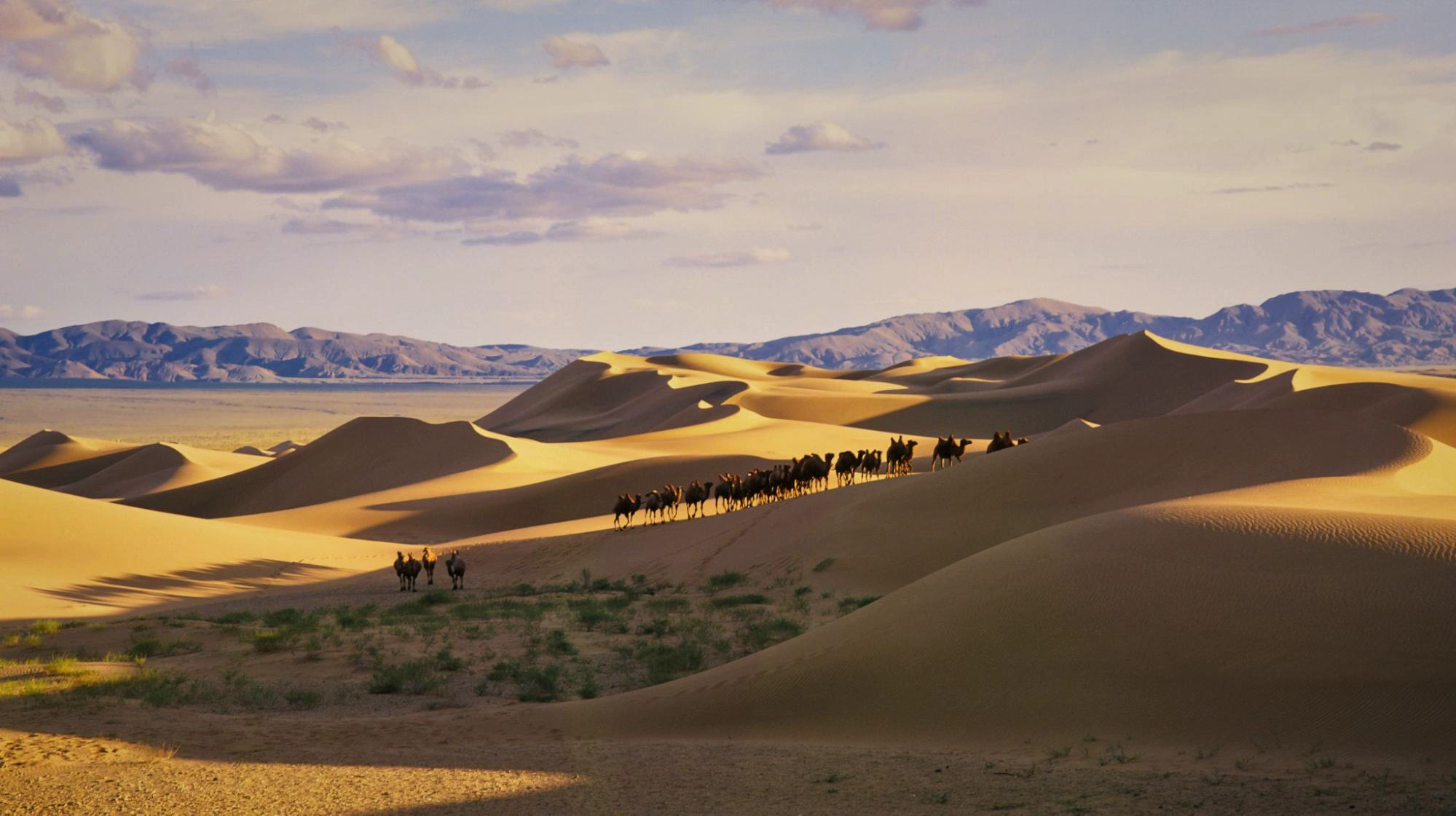
In the vast landscapes of Mongolia, that definition of luxury collapses completely. There are no towering resorts or curated diversions waiting at the edge of the steppe. Instead, there is space that feels entirely untouched, distances that remain open, and nights dark enough to reveal the full depth of the Milky Way.
Here, the luxury is in being able to move freely without a schedule, to feel the wind sweep across endless plains, and to find stillness in a horizon that stretches farther than the eye can see. In Mongolia, luxury isn’t what’s added; it’s what’s left behind: silence, scale, and a sense of total openness.
The Luxury of Absence
This environment is a state reached through what is missing.
Silence is a natural condition that exists because nothing is there to compete with it. This lack of competition extends to the night sky, where the stars appear uninterrupted by light pollution from businesses, street lighting, and housing, offering a sense of perspective that is impossible to find in much of the developed world.
In this setting, the landscape becomes a source of relief.
As you spend time in this openness, the effect is tangible. The constant hum of a digital life begins to fade, replaced by a quieter, more enduring sense of satisfaction. Comfort is stripped of its performance. It is no longer something you buy, but something you notice the moment it arrives: the way crisp air fills your lungs, the way sunlight shifts across a valley, or the way a simple meal tastes when it is seasoned by effort, patience, and the elements.
The Psychology of Vastness
When the usual symbols of status are removed, the mind begins to react to the sheer scale of the surroundings. For every traveler, there is a moment in Mongolia when your sense of scale changes and becomes difficult to measure. The mind, accustomed to city layouts, streets, rooms, and defined boundaries, searches for edges that do not exist in the steppe. When those divisions dissolve, tension is released, and your mind and body relax.
Without the usual cues to mark progress, time begins to feel different. Movement is no longer a calculation of efficiency; it becomes a steady experience of forward motion. Because there are fewer distractions, your attention naturally widens. You stop searching for highlights and begin noticing subtle shifts in the environment, such as the changing texture of the landscape or the direction of the wind.
This wide-open space also turns our awareness inward. Expectations of a schedule give way to a more natural rhythm, where hunger and fatigue arrive on their own terms. Perspective changes when placed against a seemingly never-ending horizon.
Mongolia’s vastness recalibrates travelers toward a slower, more deliberate rhythm.
Contextual Comfort
Being in this kind of openness changes how you think and feel. Out here, relief comes from the journey itself, not from having lots of choices. A simple meal after hours of wind and long distances suddenly feels amazing, because it’s warm and satisfying when the air around you is cold, and you’re feeling tired. The quiet becomes a little luxury, a cozy shelter after being exposed to the elements.
When the environment takes over like this, a “good day” becomes easy to recognize. Comfort isn’t something you have to plan or control—it’s in the small wins: getting out of the wind, finishing a long journey, or sharing a hot meal. Without everyday distractions, you start to notice the moment more. You don’t need to fix everything around you to feel comfortable. You just need to be here, present, and take it all in.
Finding the Luxury of Absence
The Season of Silence
September and October. The world revolves around the academic calendar. At home and in Mongolia, families are back for the school term to begin. But the weather remains good for travel. The nights are chilly, and with proper layering it isn’t an issue. At this time, even popular tourist camps are nearly empty, making it feel as if you’ve booked the entire place for yourself.
Year-round Blue Sky
Due to low humidity, the sky is often clear, allowing a full display of the Milky Way year-round. The main factor is being in a rural area, away from pollution, allowing you to experience the contrast of pitch-black terrain against the stars. If you don’t mind the cold and have the right gear, November and February add sub-zero air that enhances this “high-definition” clarity.
How Mongolia Changes the Way You Travel
Long after your trip to Mongolia ends, that shift in perspective stays with you and changes how you approach future travels. The country’s scale and lack of hurry leave a mark on a traveler’s habits, specifically regarding movement, time, and the need for control.
You’ll immediately have a higher tolerance for uncertainty. After spending time on routes shaped by weather, tracks, and local knowledge, unpredictability starts to feel normal. Delays or detours aren’t failures; they’re just part of moving through the land. You learn quickly that progress isn’t always a straight line, and patience becomes something you don’t have to force; it just comes naturally.
This naturally leads to less dependence on planning. It becomes easier to leave gaps in an itinerary and accept that not every detail needs to be decided in advance. You’ll stop moving through a place as if following a set of instructions and start becoming more aware of your surroundings, while still being able to adapt quickly if things go wrong.
Perhaps the most lasting change for visitors is an appreciation for slow movement. After spending days in open spaces, the need for crowded, guidebook-heavy itineraries disappears. You return home with an interest in how a place unfolds over time and its history and people, rather than how many landmarks you can visit in a day.
In Mongolia, luxury isn’t what you buy; it’s the taste of fresh air, the stretch of open space, and the peace that follows you home.
About the author
With over 25 years of experience navigating through Mongolia, Gongor Bandi has been establishing remote routes with sustainable logistics. As the founder of Gobi Travel, he specializes in matching the “unmapped” reality with refined attention.