
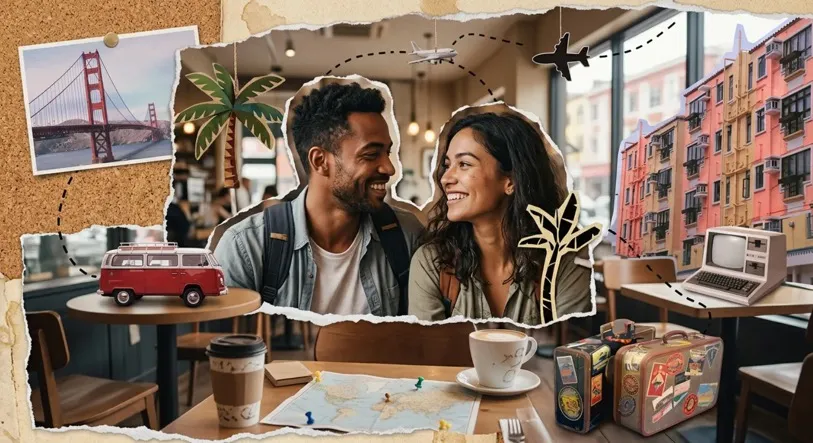
By Michael Hensel
I remember when it clicked. I was sitting at Ruesters Cafe in Bali with my laptop open, working on developing my app, like I had a hundred times before. At the same table as me, there were other remote workers doing the exact same thing. Everyone was focused on their laptops with their headphones plugged in.
We were in the same room. At the same time. Living the same lifestyle.
But nobody said a word. We all just kept staring at our screens, doing our own work.
By then I’d done the cafe tours for years, across the United States, Southeast Asia and Europe. Different cities, different menus, different playlists, but mostly the same vibe: good coffee, decent Wi‑Fi, and good working environments. But there is also this quiet barrier between people who clearly have a lot in common.
You make eye contact. You do the polite smile. Then back to the screen. Headphones on. Everyone sealed off again in their own world.
This feeling stuck with me. Because it wasn’t just the case in that one cafe I visited. It was pretty much every cafe I went in.
So I kept coming back to the same question: why does this happen everywhere?
The Connection Paradox
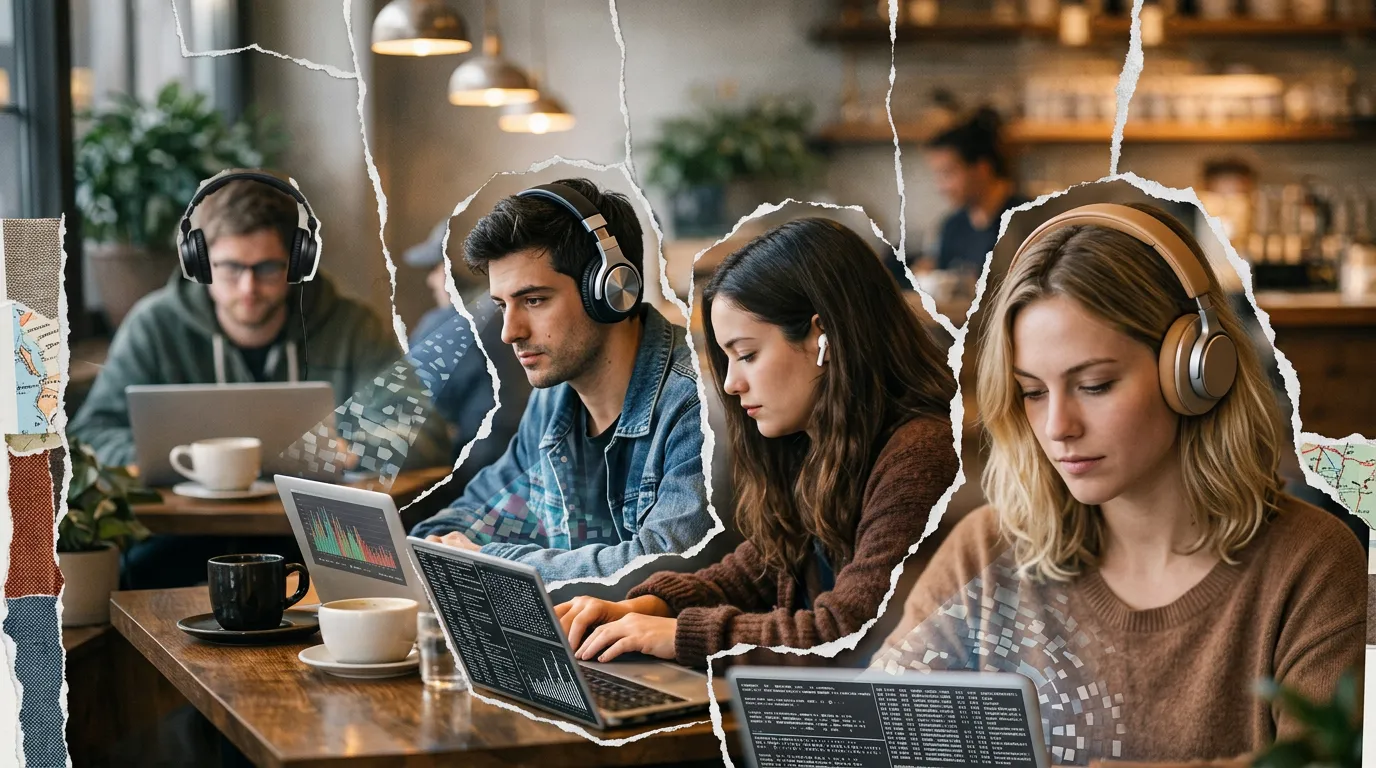
People always talk about becoming a digital nomad for freedom, flexibility, and travel. Those are valid reasons.
The version in your head looks great. You travel far and wide, visiting places you’d once dreamed about. Your working view becomes the literal Windows screensaver. You try new things, experience new cultures, and make friends fast. You picture lively cafes full of amazing, interesting people. You swap ideas. You bump into collaborators and exchange ideas. It’s social, creative, energizing. That is the version we all see online and on social media, and yes, sometimes we experience parts of it too.
But the reality can also be quieter. And, a lot of the time, lonelier. Often, people become digital nomads, and after a while of living out their dream, they realize they are missing something crucial to their happiness: community.
Once I started paying attention, the pattern became even more obvious. In Bangkok, I’d see the same people show up at the same cafe day after day, for weeks. We nodded at each other, but we never talked. When I was in Berlin, I noticed remote workers rotated between the same few cafes like they were in a routine, but everyone still acted like strangers. In Bali, I met someone building something almost identical to what I was building, and we only figured it out after we’d crossed paths multiple times.
This wasn’t about people being awkward or socially clueless. It actually felt much bigger than that. More like the setup itself was designed to keep everyone separate. Talking to strangers takes effort. Everyone assumes everyone else is busy. Headphones are a clear “do not interrupt” sign. And nomad life adds another layer: if you’re leaving in two weeks, it’s easy to think, what’s the point?
Here’s the strange part: most people feel lonely in this lifestyle, even if they don’t say it out loud. You can be surrounded by people who look like your crowd, and still feel like you’re on your own.
That’s the paradox.
Why Cafes Bring Us Together, and Keep Us Apart
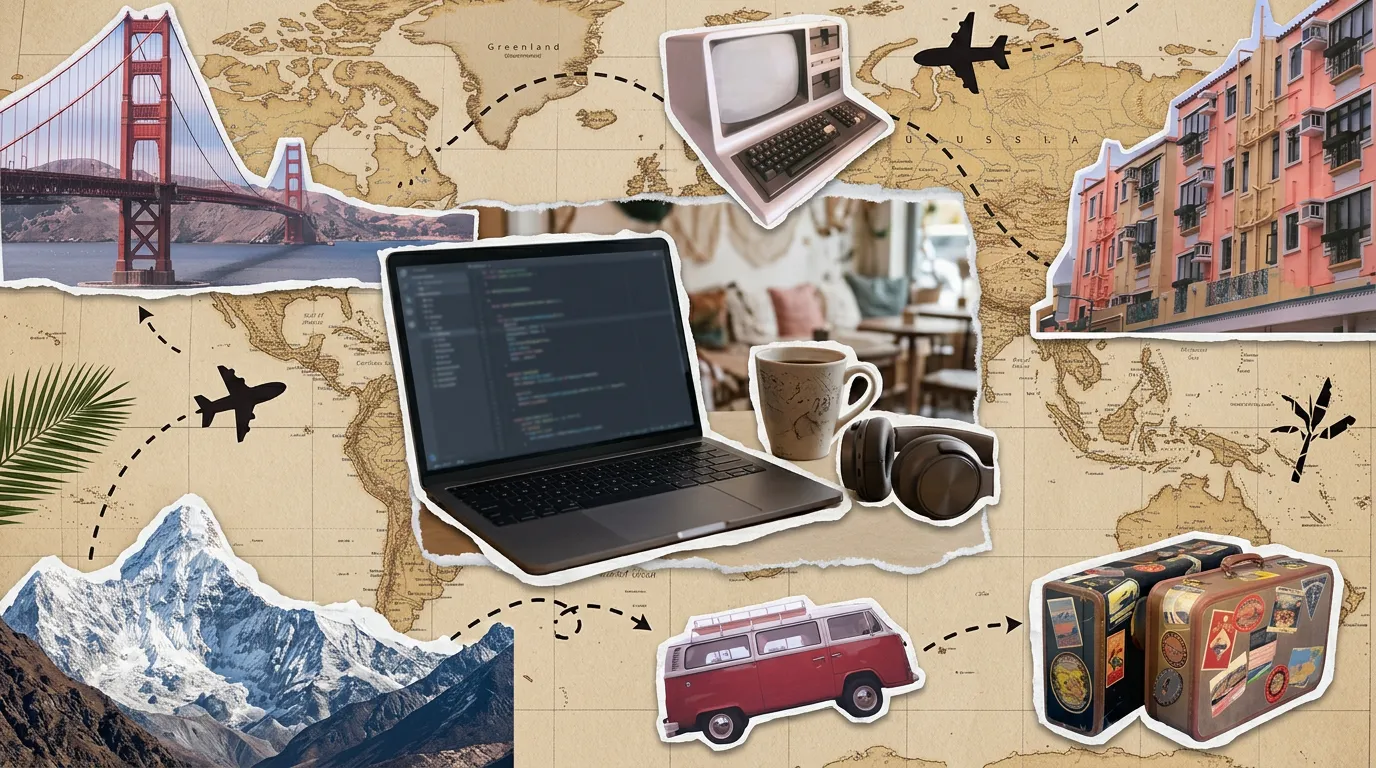
Cafes are the default office for a lot of us digital nomads. They’re where you go to focus, to work, to get our hit of that thing so critical to our survival: coffee. They’re where you go to feel less alone. They’re where you go to be around other people, without committing to anything.
But cafes are also stopping us from actually connecting.
After years of turning up in cafes and noticing this in so many places, one thing stood out: there’s no built-in way to discover each other in these spaces.
You don’t know what the person next to you does for work. You don’t know if they’re a local, visiting for a week, or have been living here for six months already. You don’t know if they’d love to chat for five minutes or if they’re trying to finish an important deadline.
There’s no low-pressure way to say, “Hey, I’m open to meeting people,” without it feeling like you’re interrupting or forcing something.
Because of this, connection becomes a game of chance.
The Small Moments That Actually Matter
When people do connect in cafes, the moments are rarely dramatic. But they do matter.
A designer and a developer can realize they’re both thinking about the same problem. Two founders swap notes and suddenly a stuck idea loosens up. Maybe someone new to the city gets a real recommendation instead of another generic TikTok list. Sometimes it’s just having a normal conversation that reminds you you’re not a ghost in a room full of other ghosts.
And those moments can flip your whole day. Sometimes they change your whole trip.
Cafe moments like this tend to stick with me more than official networking stuff. Not because coworking spaces or events are bad. Just because cafes are where people already spend hours side by side. The opportunity is right there, but the entry point is missing.
This Is an Infrastructure Problem, Not a Personality Problem
Once I started actually talking to other nomads about loneliness, the pattern was obvious.
Cafes have become the everyday workspace for millions of remote workers, but they were never designed to help people find each other—they were designed with serving food and drink in mind, but have evolved over time into so much more than this. They are now workspaces, social hubs, and the center of communities. However, without any way to discover or signal, you can end up with the same thing over and over: a room full of people who would probably get along, and yet, all sitting alone.
That gap is starting to get attention. People are experimenting with ways to lower the friction, to help you see who’s around, and to make a quick conversation feel normal instead of awkward. I’ve gotten involved in building one of those tools. But the bigger point isn’t any specific app.
The point is: when you remove just a little friction, people start to connect.
The Loneliest Feeling
The nomad lifestyle can give you a lot. Unlimited freedom, the joy of discovering new places, experiencing new cultures, finding your real purpose in life, and of course, some great anecdotes.
However, it’s not all glitz and glamour. You can travel constantly and still feel alone. You can work in a cafe full of interesting people and never talk to any of them. Not because you’re doing something wrong, but because the environments around you weren’t built for it.
The people you’d get along with are already near you. They’re probably just as open to connection as you are. They could be waiting for a signal, an opening, or a reason to speak.
The loneliest feeling isn’t being alone. It’s being surrounded by your people and not realizing it.
A Quiet Rethink
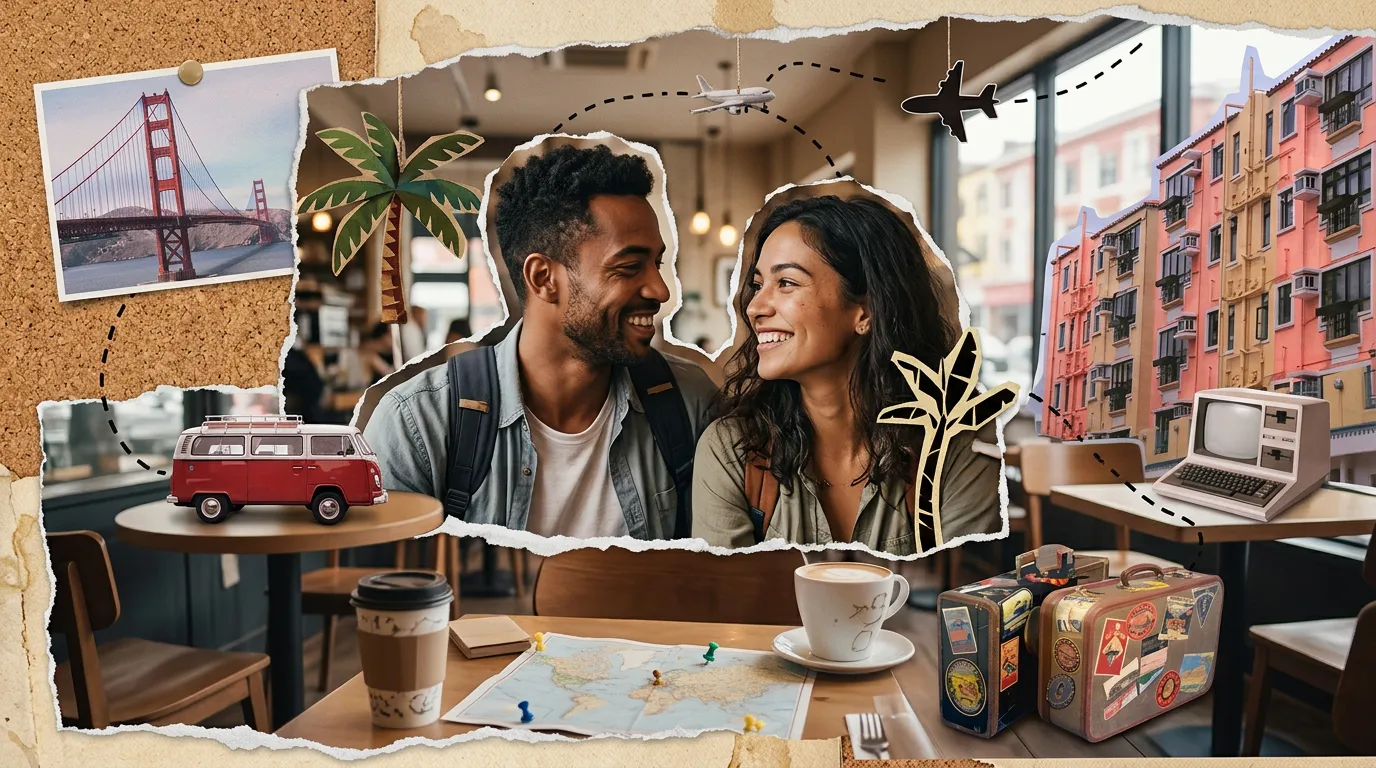
The longer I live and work as a digital nomad, the clearer this becomes to me: the loneliness many of us feel isn’t a contradiction of our lifestyle. It’s a consequence of how our environments evolved without rethinking how people relate inside them.
Cafes became our offices. But they never became social spaces. They offer proximity without context. We sit close enough to recognize faces and routines, yet far enough apart that speaking feels like crossing an invisible line, especially when you’re mindful of interrupting people’s work.
I’ve realized what is missing isn’t confidence, extroversion, or better social skills. It’s permission.
Permission to acknowledge the person next to you without an agenda. Permission to signal openness without commitment. Permission to treat shared space as something more than silent coexistence.
Digital nomads are uniquely positioned to rediscover this. We already share curiosity, mobility, and a willingness to start over in unfamiliar places. The ingredients for connection are present almost everywhere we work. I believe they’re just hidden behind assumptions and habits.
Maybe the next evolution of nomad life isn’t about finding better destinations, faster Wi-Fi, or more photogenic cafes. Maybe it’s about learning how to notice the people who are already sitting next to us.
Because the issue was never that nomads don’t want connection.
It’s that we got used to working alone together, and have forgotten how close the connection actually is.
About the Author
Michael Hensel is a long-term digital nomad and founder who has spent years working from cafes across Southeast Asia and Europe. His work explores how physical spaces, technology, and human behavior intersect in the remote work era, with a focus on practical ways to help people better connect while traveling. Learn more at lattecino.com, on LinkedIn, or on TikTok.