Feature by Jessica Holmes
Let’s be honest: the internet loves a good “working from paradise” moment. But what is digital nomad life really like in 2026? In this article, we share real stories from digital nomads around the world, covering how they make money, the challenges they face, and what life on the road actually looks like.
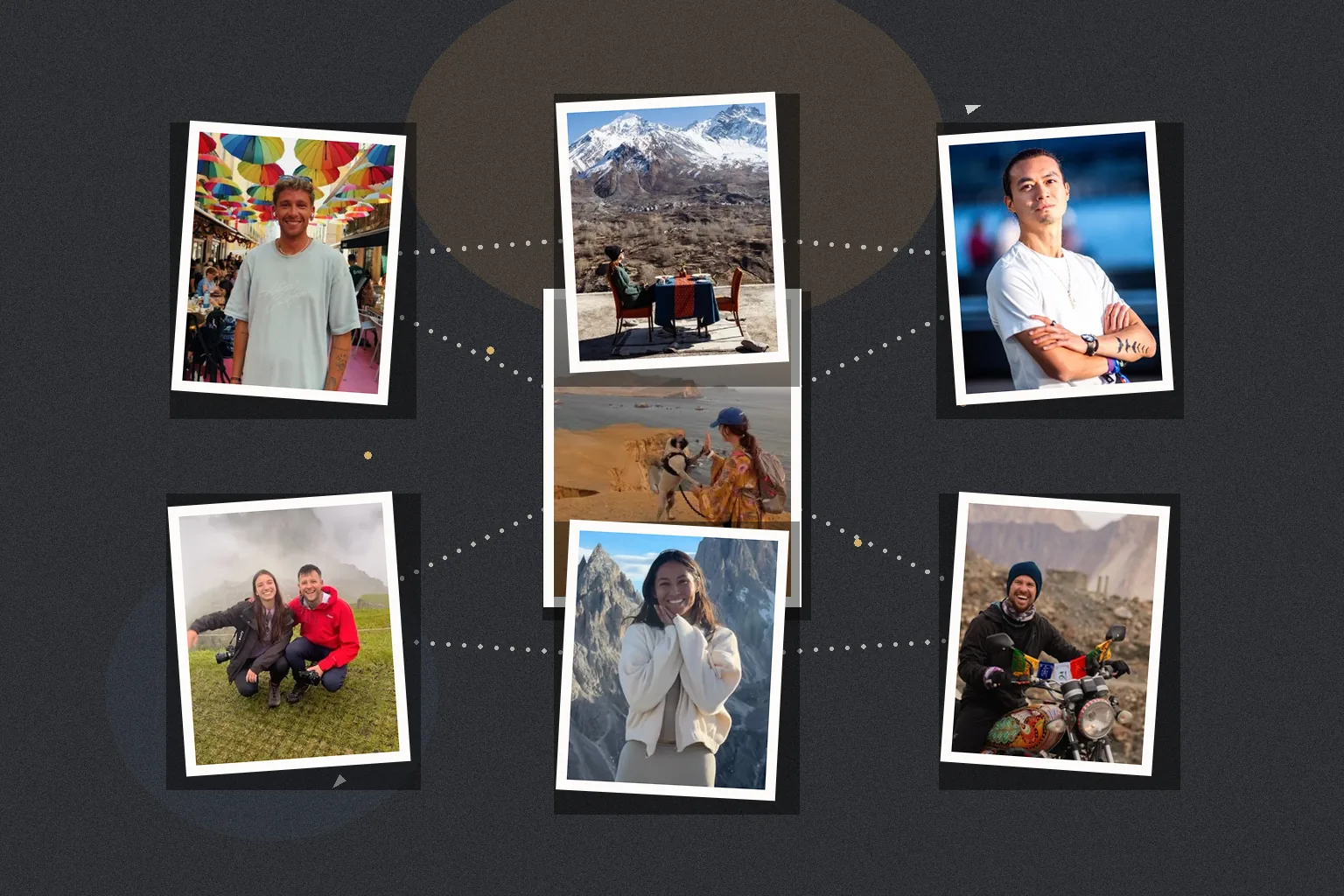
We wanted to step away from polished narratives and hear directly from the people actually living the digital nomad lifestyle. We reached out to digital nomads, remote workers, creators, and entrepreneurs across social media that are real people building lives that work for them. We asked about their day-to-day routines, how they earn and manage money, what surprised them most about nomad life, and the adventures that keep them going.
The responses were honest, varied, and refreshingly imperfect. Some stories are aspirational, others grounding, but all of them are real.
At Nomad Magazine, it’s important to us that we don’t just perpetuate a lifestyle from the outside. We want to reflect the voices of the community itself, in all its diversity and complexity. In this article sit their words, their experiences, and their realities, shared to inform, inspire, and connect with those already on the road and those still dreaming of it.
What Is Digital Nomad Life Really Like?
Digital nomad life is often framed as freedom, flexibility, and working from anywhere, but in reality, it’s far more nuanced than that. It’s a lifestyle built on movement and adaptation. There’s not always a fixed routine or guaranteed stability, and there’s not a single path that works for everyone.
For some, it looks like slow travel – spending months in one place, building community, and creating structure. For others, it’s faster-paced, moving between countries while balancing work deadlines and logistics.
What these stories reveal is that digital nomad life means you’re more fully responsible for your income, your schedule, your environment, and your support system. The freedom is real, but so is the need for resilience and problem-solving.
How Digital Nomads Make Money
There’s several income models that define digital nomad life. Most people build a mix of income streams that evolve over time, often combining remote work with more flexible or creative pursuits.
Some rely on freelance work such as writing, design, marketing, development, or consulting, offering services to clients around the world. Others secure fully remote jobs that allow them to work while traveling, providing more stability and predictable income.
Many digital nomads work in content creation, blogging, affiliate marketing, brand partnerships, and online businesses.
A common thread is experimentation. Very few nomads start with a perfectly functioning system. They test different income streams, learn what works, and gradually build something sustainable.
The Biggest Challenges of Digital Nomad Life
Whilst digital nomadism offers freedom, it also comes with real and often underestimated challenges.
One of the biggest of those is instability. Income can fluctuate, plans change quickly, and external factors such as visa issues, weather events, or global disruptions can interrupt even the best-laid plans.
Loneliness and mental health are also recurring themes for nomads. Constant movement can make it difficult to maintain relationships, and while you meet people quickly, those connections are often temporary. Without a stable support system, it’s easy to feel isolated.
There’s also the logistical side: managing time zones, booking travel and accommodation, finding reliable Wi-Fi, navigating new environments, and maintaining productivity without a fixed routine. Even simple tasks like healthcare or banking can become complicated and frustrating.
Unexpected Benefits for Digital Nomads
Despite the challenges, many of the most meaningful aspects of nomad life are the ones you don’t anticipate.
There’s a unique intensity to relationships formed on the road. Friendships often develop quickly and deeply, shaped by shared experiences and a mutual openness to connection.
Perspective is another major shift, where exposure to different cultures, ways of living, and inequality can reshape how you see the world and your place in it. It often leads to a stronger sense of independence and clarity around personal values.
Many nomads also experience significant personal growth. Being constantly outside of your comfort zone forces adaptability, problem-solving, and resilience. Over time, this builds confidence and a trust in your ability to handle things.
Real Digital Nomad Stories
Lora — Travel Creator & Airbnb Host
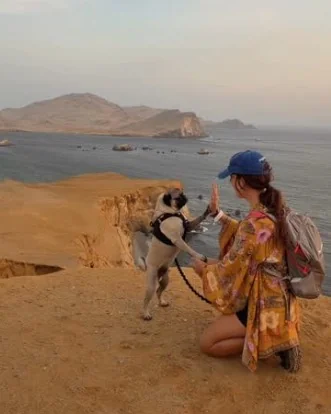
“I was never happy in my government job… every day felt like I was living someone else’s version of success.”
For Lora, dissatisfaction had been there for a while. It sat just under the surface, persistent, but easy to ignore. Then everything shifted at once. “My dad passed away suddenly, and a breakup followed right after. It was one of those moments where life gets very real, very fast… I didn’t want to wait for ‘someday’ anymore.”
What started as a year of personal leave became something else entirely. “I met so many people living these alternative lives, and it completely rewired how I saw what was possible.”
Today, her life is built on a patchwork of income streams. “My income is a mix of ads, affiliates, sponsorships, Airbnb hosting, and brand collaborations on my dog’s Instagram.”
But the defining moments aren’t financial, they’re visceral and raw. “Antarctica… it felt like we’d landed on another planet… the silence, the scale of the ice, it makes you rethink your place in the world.”
And sometimes, the smallest decisions change everything. “I came to Puerto Vallarta for what was supposed to be a three-month stopover… I ended up getting residency, buying an apartment, and adopting a Mexican street dog.”
That dog, Puglo, became both an anchor and a surprise. “I assumed it would hold me back, but traveling with him has only opened more doors.”
Across Every Border — Freelance Digital Nomads & Content Creators
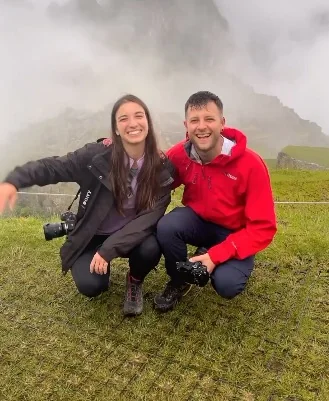
“This might sound dumb, but we once left the airport without our luggage…”
For Ryan and Sara, life on the road isn’t just about transformation, it’s often chaotic, unpredictable, and occasionally ridiculous.
“The staff told us the only way to get it back was to cause a scene, so we did and it worked!”
But underneath the humor is something deeper: a relationship that began entirely by chance.
“The most meaningful friendship for us has to be the one between us, since we met while traveling in Bali… eventually that friendship turned into a relationship, and now we’re traveling the world together.”
They didn’t arrive at a digital nomad lifestyle from the same place.
“Ryan wanted to be his own boss and experience new countries and cultures. I (Sara) was going through a really dark period in my life and traveling felt like my only escape… it turned out to be the best decision I ever made.”
Together, they’ve built a life that continues to evolve. “We’re both freelancers… we also earn income through our own social media, and we’re currently transitioning to become full-time content creators.”
And while the road is often messy, it’s also unforgettable. “Our road trip through the Bolivian highlands… it felt like we’d landed on another planet.”
Marko — Content Creator & Trip Organizer
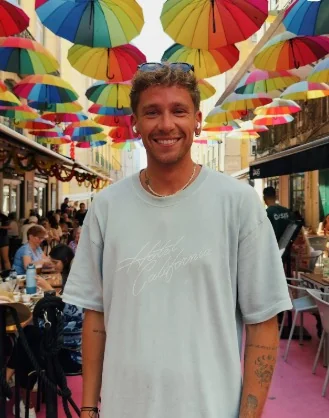
Marko’s journey began with a feeling many nomads know well: dissatisfaction that refused to be ignored.
“I just wasn’t happy. That wasn’t life for me… I was overwhelmed. I was probably depressed at some point as well and I just wanted to change that.”
To fund his travels, he made a bold, clean break. “I sold everything I owned before I came on this trip… I also organize group trips and have started doing collaborations in UGC content for brands.”
The ocean has become his anchor, especially in places like Australia and the Philippines.
“I went free diving on the Great Barrier Reef… it was whale season. I could hear them calling to each other underwater… It was the most amazing experience of my life.”
Community plays a huge role in his nomadic life. “Those other backpackers… have something in them that is curious about the world. They want to discover. It makes you want to keep discovering alongside them.”
But he notes that travel can quickly remind you who’s in control. “The typhoon I’m facing right now has been an unexpected challenge… we’ve gotten stuck in El Nido (Palawan, Philippines). The roads are blocked and the airports are closed… there’s no way around it, we’ve just got to wait.”
Yvette Bax — Professional Travel Writer
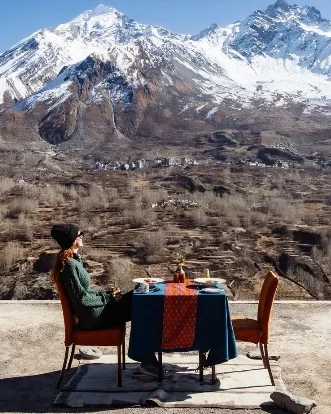
Unlike many nomads, Yvette didn’t leave an old life behind, travel has always been her profession. “I never had an ‘old life’ that I left behind… I have been a travel writer basically my whole adult life.”
With 135 countries under her belt, her relationship with travel has matured over time. “I now notice I lean more towards very unique landscapes that feel ‘alien’ to me.”
From Antarctica to the Galápagos, her most powerful moments often come in silence. “These special and remote places give you such a serene sense of peace, it is priceless.”
Her career has been built on persistence and craft. “I just started writing a lot, pitching stories… after that I became the editorial head of the travel section of a big Dutch newspaper.”
But even a life built around travel isn’t immune to disruption. “I got stuck twice during Covid… that was probably the most stress I have ever experienced while traveling.”
Still, moments of awe make it all worthwhile for her. “In Antarctica… three HUGE humpback whales came swimming beside me and underneath my kayak… I cried. I will never ever forget that moment.”
Freeman Fung — Life Coach & Entrepreneur
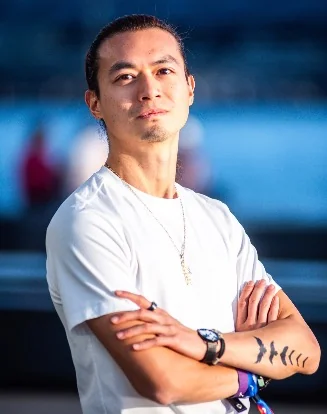
“I grew up in Hong Kong… everything is nonstop, financially driven. I was conditioned to chase money and status, but I wasn’t good at playing that game.”
By 19, that pressure had reached a breaking point. “I felt I had two choices: either to end my life, or to do something very radical.” He chose the latter, embarking on a solo trip to Romania. “It turned out to be the best summer of my life… I realized we’re here to live our own path, not someone else’s.”
That shift became the foundation for a life of travel. Today, Freeman earns through a mix of income streams, primarily life coaching.
His travels have also reshaped his worldview and a visit to Mumbai’s Dharavi left a lasting impact. “Seeing that level of inequality in real life… it changes you. You realize how much you don’t see when you stay in your comfort zone.”
His biggest challenge came when his health collapsed in his mid-twenties. “I was diagnosed with chronic fatigue syndrome… I had no energy and severe insomnia.” That forced a reset. “As a traveler, you have to take full responsibility for your health.”
Recently, he marked a milestone that once felt unimaginable. “I received my Australian citizenship… my third passport at age 33. For someone who left home at 19 not knowing anything, that feels pretty wild.”
For Freeman, nomad life isn’t about escape. “It’s about creating a life where freedom and stability can coexist.”
Lis Kanzler — Creative & Digital Nomad Coach
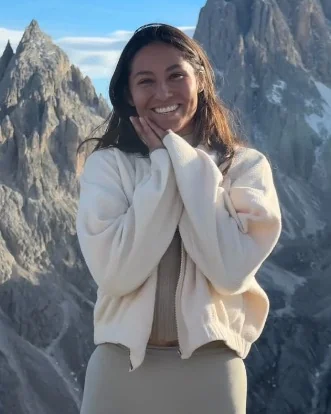
“The idea of simply ticking boxes… felt suffocating rather than safe.”
Lis didn’t reject the conventional path immediately, but it never quite fit.
A prestigious job in New York triggered a deeper realization for her. “I remember standing in that elevator one morning and thinking, ‘Is this it?’”
So, she booked a one-way ticket to Brazil and never looked back. “Less than a month after arriving, I landed my first fully remote job… Suddenly, the vision I had felt for years became reality.”
But, her life and career hasn’t necessarily been straight-forward since then. “My career is not a straight line, but a dynamic ecosystem of creativity, courage, and self-expression.”
After a decade on the road, the challenge became less external and more internal. “I began to feel fragmented… trapped inside my own freedom. This challenge led me to help countless digital nomads reconnect with themselves.”
In the end, the biggest transformation wasn’t tied to a specific place. “The most extraordinary adventure hasn’t been one single experience, but rather the person I’ve become along the way.”
Will Hatton — Travel Blogger & Entrepreneur
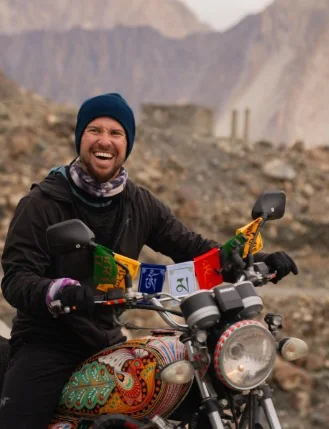
“I had a traumatic injury when I was 19…”
Before traveling, Will’s life was heading in a very different direction.
“My plan had been to join the army, but after this injury I was no longer able to get in. I went through a very difficult period struggling with my mental health… I worked a bunch of really terrible jobs for minimum wage and quite quickly came to the conclusion that being in the UK wasn’t the right fit for me.”
He left and spent two years in India. “Living on a budget of $10 a day, hitchhiking, couchsurfing, sleeping in train stations, and picking up odd jobs… I became a lot less shy, a lot less anxious, and gained a lot of skills. And I was like, wow, this is where I’m supposed to be. I need to find a way to make this into a lifestyle.”
Turning that into a sustainable life took a lot of trial and error. “I’ve had about 30 different online ventures. A lot of those didn’t work out.”
Some did. “My travel blog The Broke Backpacker I monetized for affiliate marketing… I also lead my own tours… And I own a hostel in Bali catering for digital nomads and aspiring entrepreneurs.”
In earlier years, he hustled in creative and sometimes difficult ways. “I’d stuff my backpack with silver jewellery, leather satchels, pashminas, bring it back to the UK, and sell a backpack worth of stuff to make a couple of grand. I could live off that for ages.”
When it comes to friendships on the road, he has a lot of insight. “When you meet people traveling, things happen a lot quicker… It’s a bit like speed dating but with friends.”
Will speaks candidly about the darker edges of life on the road. “The repeat offender for me is dealing with mental health challenges, depression or anxiety whilst I’m traveling… When you’re on the road you can feel very lonely as well. It’s two sides of a coin.”
Still, the awe inspiring hold of adventure remains his anchor. “Whilst hitchhiking across Iran I camped for a week on the island of Hormuz. Crystals were bursting out through the sand in shades of purple, red, silver… It was psychedelic.”
What These Stories Share
When you read these stories side by side, a theme of courage emerges.
Lora refused to wait for “someday,” instead choosing to honor the fragility of time after personal loss; Ryan and Sara chose movement over stagnation and built a relationship in motion; Marko sold everything he owned and stepped into uncertainty with nothing but curiosity; Yvette committed to decades of craft, turning travel into disciplined mastery rather than escape; Freeman redefined his life after hitting rock bottom, turning travel into a vehicle for purpose, healing, and connection; Lis confronted the internal cost of unlimited freedom and chose to rebuild from the inside out; and Will transformed injury, depression, and minimum-wage frustration into a portfolio of experiments that ultimately became entrepreneurship.
They each have different starting points and income streams and yet their stories intersect and align in powerful ways.
Ultimately, what unites them is that they experimented relentlessly, failed both publicly and privately, diversified their income streams, worked odd jobs, built blogs and brands and tours and creative ecosystems, and allowed themselves to be reshaped by the people and places they encountered.
They formed relationships quickly and thoroughly because the road demands you to be in the present moment; they sat in the silence of Antarctica and felt small; they caused scenes at airports to retrieve lost luggage; they waited out typhoons; they swam with whales; and they learned, again and again, how to steady themselves when the external world refused to be stable.
Nomad life, through their words, is resilience and reinvention with no safety net. And perhaps that is what is missing in so many surface-level narratives: this lifestyle is not about running away from responsibility, but about running toward autonomy, curiosity, growth, partnership, healing, and meaning, and accepting that those pursuits require discipline as much as freedom.
There is no specific pathway here and no guaranteed income formula. But there is grit, determination, and agency, and in a world that still prescribes just a few narrow definitions of success, choosing to define your own might be the most radical adventure of all.
FAQs
Is digital nomad life realistic?
Yes, but it’s not as effortless as it’s often portrayed. Digital nomad life is realistic for people who are willing to build remote income streams, adapt to uncertainty, and take full responsibility for their lifestyle. It usually takes time to establish financial stability and find a rhythm that works long-term.
How do digital nomads make money?
Digital nomads make money through a mix of remote jobs, freelancing, online businesses, and content creation. Common income sources include marketing, design, writing, software development, consulting, affiliate marketing, and brand partnerships. Many rely on multiple streams rather than a single job.
Is it lonely being a digital nomad?
It can be. While nomads often meet new people easily, those connections are sometimes short-lived. Without consistent community or long-term relationships, loneliness can become a challenge. Many nomads address this by slow traveling, returning to familiar places, or actively building community on the road.
How much do you need to live as a digital nomad?
Costs vary widely depending on location and lifestyle. Some nomads live comfortably on $1,000–$1,500 per month in lower-cost countries, while others spend $3,000 or more in expensive cities. Key expenses include accommodation, food, transport, insurance, and workspace. Flexibility is one of the biggest advantages as you can adjust your lifestyle to match your income.
What jobs can you do while traveling?
There are many jobs that support a digital nomad lifestyle. Common options include freelance writing, graphic design, web development, social media management, virtual assistance, online teaching, and remote corporate roles. Increasingly, people also build their own businesses or monetize content through blogs, YouTube, or social media.
About the author
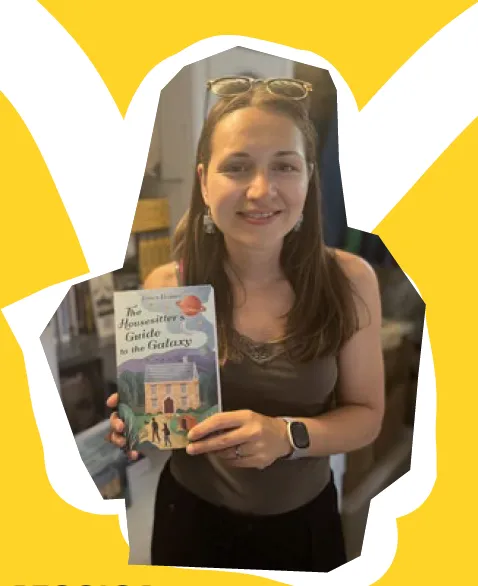
Jessica Holmes is a writer and senior editor at Nomad Magazine. Follow her on Instagram @hitchedhikingandhousesitting.