
Essay by Nina Hoeberichts
Remote working is one of those topics that instantly sparks debate, and your perspective often depends on your generation. For some, it represents freedom, flexibility, and a long-overdue shift in how we think about work. For others, it signals declining culture, lost collaboration, and blurred boundaries.
What’s undeniable, however, is its rapid rise over the past decade — a transformation dramatically accelerated by the Covid pandemic. Yet just as it seemed remote work was here to stay, the tide began to turn. Some companies have started rolling back remote options for reasons that are not always entirely clear, whilst others have continued to embrace, and even double down on, this way of working.
So what does that mean for the future of remote work?
Current Landscape of Remote Working
As of 2026, the great remote-work experiment sparked by the pandemic is clearly entering a new phase. Many companies that enthusiastically adopted remote policies during the height of Covid-19 are now rolling them back. With the immediate health threat behind us, leaders are reassessing whether remote work truly fits their long-term strategy.
What makes this shift particularly interesting is the contradiction at its core. A substantial body of evidence suggests that remote work benefits employees and improves productivity — as the IMF has documented. Yet despite these findings, many corporations are dialing back flexibility and calling employees back to the office.
At the same time, there’s another side to the story. A significant number of companies (particularly in the tech sector) are increasing remote work roles. They’re building their entire operating model around it. For these organisations, remote work is a deliberate choice.
There’s also a noticeable divide among individuals. Some people genuinely prefer a hybrid setup, enjoying the balance of focused time at home with a few days in the office to connect with colleagues face-to-face. Others thrive fully remotely and have no desire to return to a physical workplace.
Successful remote work requires a particular mindset. It demands discipline, independence, and strong planning and organisational skills.
Trends in the Remote Working Space
Several clear trends are shaping the future of remote work. The most prominent is the rise of the hybrid model. Many companies have settled on this middle ground, arguing that in-person interaction is still essential for collaboration and culture. Employees may work from home part of the week, but are typically expected in the office once or twice. The result? Greater flexibility, but not complete freedom to travel and work from anywhere.
Another major shift is the move toward asynchronous work. In distributed teams, especially across time zones, constant meetings simply aren’t practical. Clear, concise written communication has become a core skill. So has the ability to run efficient meetings when they do happen, with strong preparation, clear agendas, and defined decisions. In a remote environment, clarity isn’t optional; it’s foundational.
The Digital Nomad Factor
Many countries are offering ‘Digital Nomad Visas’ to attract remote workers, who often have more spending power. I believe in the coming years we’ll see more of these kinds of visas appearing, especially for countries that could benefit from an influx of such workers.
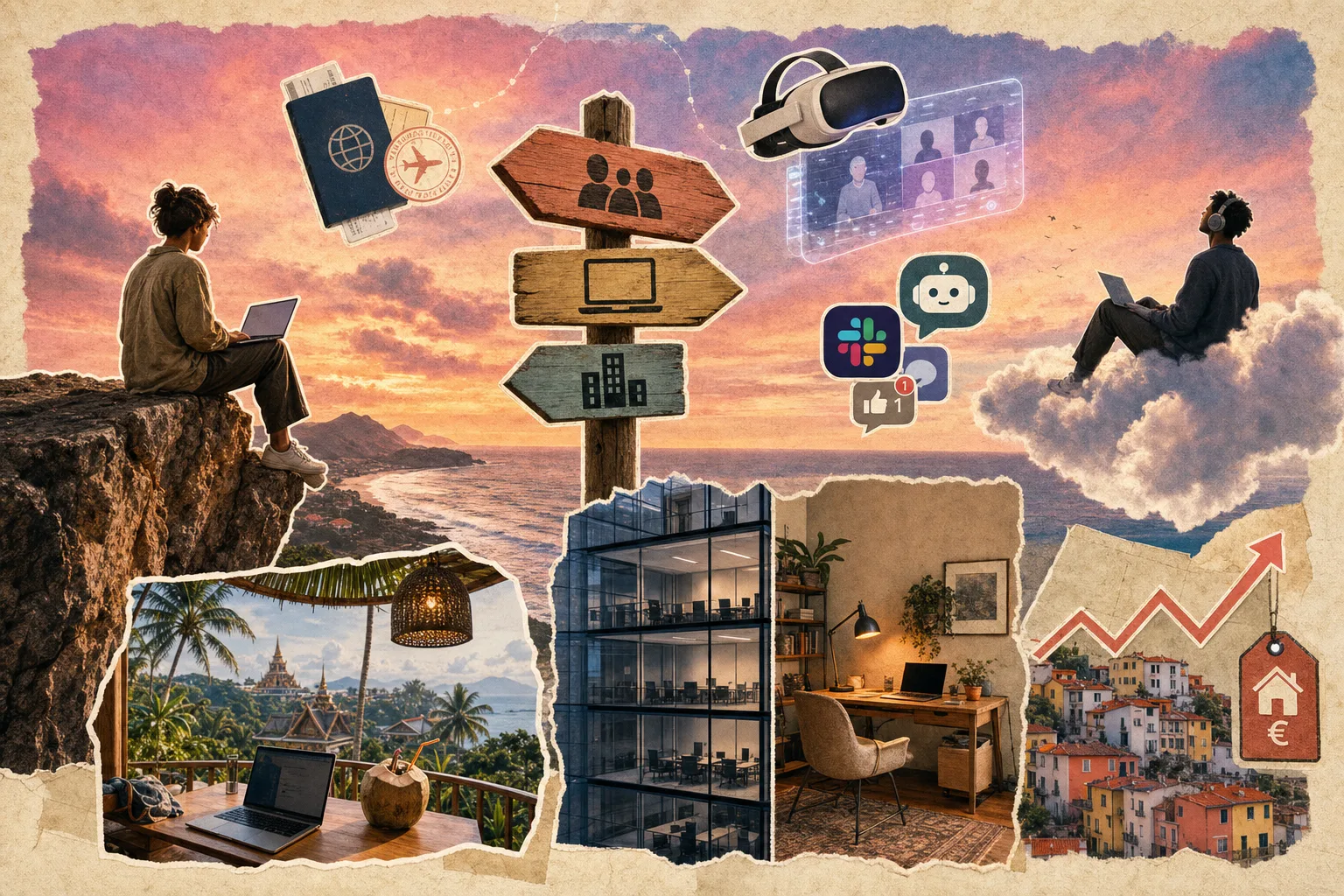
I first worked remotely in Spain and now in Thailand — a move I wrote about on my blog. The freedom to work from anywhere is not just about being location independent — it’s about working on your own terms, when you want to, and not having to stick to standardised working hours. The opportunity to discover new countries and cultures is something that many people would like to experience, and remote working enables that to happen.
One of the biggest challenges is economic displacement. When large numbers of remote workers with higher spending power move into a city, prices inevitably rise, and locals are often the ones who get pushed out. We’ve seen this happen in Portugal, and the same pattern is emerging in many other digital nomad hotspots.
If remote work and digital nomadism are to remain sustainable, governments will need to anticipate these side effects more carefully. That means putting thoughtful policies in place to address rising living costs, housing shortages, and the broader socio-economic tensions that can follow in their wake.
The Future of Workplace Technology
Technological innovation is reshaping almost every industry, and remote work is no exception.
One of the most intriguing developments is the rise of VR for collaboration. Virtual reality meetings can create the feeling of sharing the same workspace, potentially countering the argument that remote teams lack “real” collaboration. Some of my colleagues have experimented with it, and while it’s a uniquely immersive experience for a few hours, longer sessions can strain the eyes or cause dizziness.
Beyond VR, the ecosystem of digital collaboration tools continues to expand, building on platforms like Miro, Slack, and Basecamp.
And then there’s AI. New tools are dramatically increasing efficiency in remote environments, from automated meeting transcripts and summaries to smart follow-up suggestions. Solutions like Notion AI even connect multiple apps, allowing you to retrieve information across platforms with a single command.
Challenges To Be Solved
Remote work still comes with challenges. In hybrid setups, inequality can creep in. Employees who live near the office often gain more visibility, which can translate into promotions and pay rises, even if remote colleagues perform at the same level. Physical presence can still influence perception.
Pay is another contentious issue. When salaries are based primarily on location rather than role or performance, large gaps can feel arbitrary and demotivating, especially in fully remote teams where geography has little impact on output.
There are also legal and tax complexities when hiring across borders, leading some companies to restrict where employees can work from. While employer-of-record services and global payroll platforms help, they are often expensive and difficult to scale. Until these systems become more streamlined, some companies will continue to limit where their employees are allowed to work from.
At the same time, remote work creates opportunities for people previously excluded from traditional offices. The challenge is making sure it truly expands access, rather than simply shifting advantage from one group to another.
Predictions
In industries like software, tech, and digital marketing, remote-first companies are increasingly the norm. They’re continuously refining how teams collaborate and stay productive, with AI and emerging tools like VR playing a growing role. In person meetings won’t disappear, but they’ll be more intentional, focused on connection and strategy rather than spontaneous office interactions.
Remote work will become a competitive advantage for talent retention. I believe smart, skilled workers will ultimately demand remote working and will only work for companies that offer this way of working. Meaning, that there is a fair chance that companies who do offer remote work will start to outperform those companies that don’t offer it — at least in the long run.
Then there’s the rise of AI and VR tech and tools that will help shape the way we work (remotely) as well.
Remote work will likely evolve beyond the “work from anywhere” ideal into something more structured and intentional. Companies will need clearer policies around communication, performance, and well-being to prevent burnout and isolation.
If done right, remote work has the potential to offer more flexibility, better work–life balance, and access to opportunities that were once limited by geography.
The question is not if remote work will stay, but how intentionally we shape what comes next.
About the author