
Personal story by William Davis
Remote workers spend a lot of time searching for the next place to live. Lisbon, Bali, and Mexico City tend to dominate the conversation.
But there is a small island in the western Pacific that never shows up on those lists.
I get the same reaction every time I tell someone where I live.
“Saipan? Where’s that?”
I’ve been answering that question for almost four years now, ever since I left Charlotte, North Carolina for a three week visit to a small island in the western Pacific and never quite made it back.
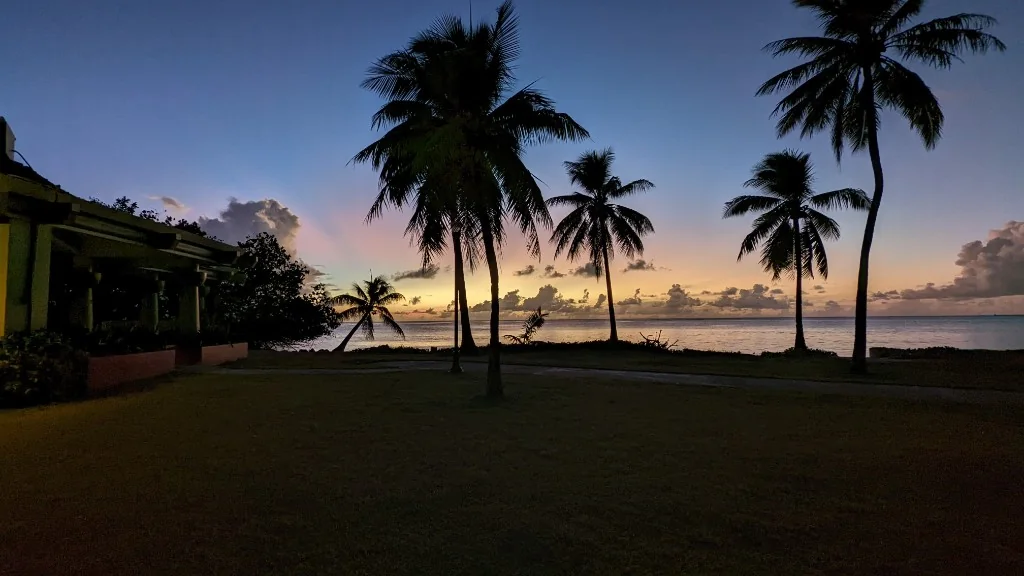
My first week here, I was walking my dog along Beach Road at sunset. No crowds. No competition for a view of the ocean. Just me, my dog, and a few other people taking in the water like it was the most ordinary thing in the world.
Coming from Charlotte, it did not feel ordinary at all.
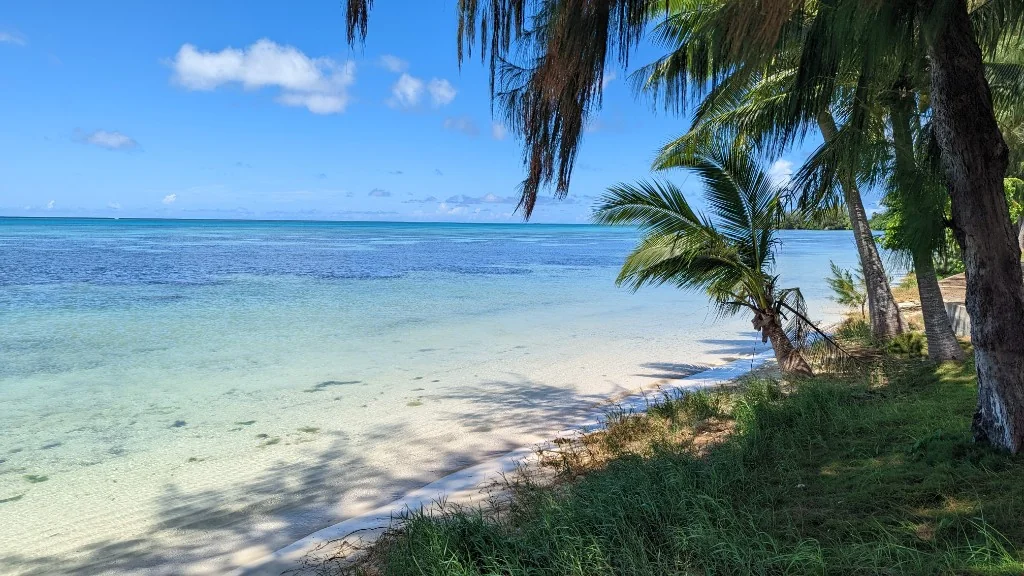
Photographs in this article were provided by the author.
Saipan is the capital island of the Commonwealth of the Northern Mariana Islands, a U.S. territory about 120 miles north of Guam and roughly 6,000 miles west of the mainland.
Living here means warm weather year round. No heating bills. No scraping ice. No checking the forecast before leaving the house.
What you notice first, though, is the humidity. I was used to the humidity in North Carolina, but not in May. In Saipan, it is constant.
The closest comparison I have found is Florida in winter. The heat never becomes oppressive the way it can in the American South.
Rain showers move through quickly. Sometimes you duck under a tree for a few minutes and the sun comes back out before you finish your walk.
Almost nobody in the remote work conversation has heard of this place, but that is starting to change.
Why Remote Workers Are Starting to Notice Saipan
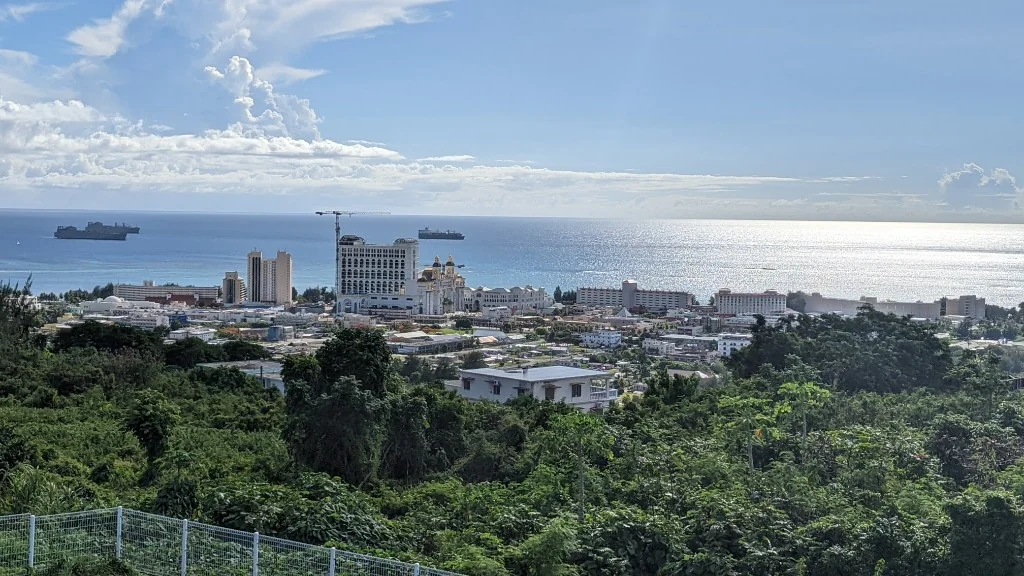
On my first trip here, a friend took me to get pizza in Garapan, the closest thing the island has to a downtown.
The restaurant was not really open yet. No chairs. No tables. Boxes stacked everywhere. They were doing takeout and some deliveries.
Since my hotel was not nearby, I asked if someone could ride with me to drop it off. The owner, Joel, said he would do it himself.
We climbed into his car, which looked more like something a high school student might drive than a business owner. On the way over he explained his plan.
Authentic Italian pizza that could compete with anything in the United States, made in a stone oven he ordered directly from Italy. It took six months to arrive and they had only been using it for about a week.
I tried the pizza.
I knew Joel’s business was going to do well.
That box-filled room is now packed with tables and a revolving door of guests eating homemade salads, fresh pasta, and pizza that would not feel out of place in a top restaurant back home. It sits right next to the beach, slightly out of place but somehow completely at home.
Then there is RJ. His restaurant is named after his two sons and he runs it with his wife, who still works her day job at the hospital while they grow the business.
RJ serves Filipino style fried chicken. Think Jollibee, except I think it is better. When I told him that he laughed and shook his head. He just keeps cooking.
The first thing that caught me off guard was how American the island still feels.
People speak American English. The same shows you grew up watching play on television. There is a USPS office on the corner. Speed limits are in miles per hour. Prices are in U.S. dollars.
For people who want to live somewhere different without navigating a foreign system, that combination is harder to find than it sounds.
It is also a U.S. territory in the legal sense, which matters practically. You do not need a passport to move here if you’re American. Social Security deposits in dollars. Medicare Part A and B apply. Opening a bank account or seeing a doctor works the same way it would anywhere in the U.S.
Arriving in Saipan is a hybrid process. Immigration is handled by U.S. Customs and Border Protection, while customs itself is managed locally by the Northern Mariana Islands government. It reflects the island’s status in a nutshell: American in some ways, distinctly its own in others.
For non-American visitors, the CNMI operates its own visa waiver program separate from the U.S. mainland. It currently covers twelve countries across the Asia-Pacific region, plus the United Kingdom; but does not yet include most of continental Europe. Eligible travelers apply through a simple electronic authorization before departure, similar to the U.S. ESTA process, and can stay up to 45 days.
If you’re from outside these countries, longer stay options exist but require more planning.
Once you arrive, the practical details are easy to sort out. My first place here was a three bedroom house that allowed pets, so my dog and I took it.
I paid $1,500 a month with water and electricity included. In Charlotte, something comparable would have cost far more.
A more modest one bedroom usually rents for $700 to $1,200 depending on the area. Dinner out at a local restaurant often costs what dinner out cost on the mainland twenty years ago.
The Things Nobody Tells You
Saipan is not a good fit for anyone who needs regular access to specialized medical care. The hospital handles the basics, but serious procedures mean flying to Guam, Manila, or Seoul.
You will need a car. The island does not have meaningful public transit. Because of its size, though, you rarely drive more than fifteen minutes anywhere.
Luxury goods are not here. Neither are major conference centers or nightlife districts. But most people curious enough to come here aren’t looking for those things anyway.
For those who do get restless, Saipan sits within short reach of several major cities. Tokyo is about three hours away by direct flight. Manila, Seoul, and Hong Kong are not much farther. Guam is a thirty minute hop.
Now, let’s talk about typhoons.
Yutu hit hard in 2018 and changed how this community thinks about resilience.
Today you see rooftop solar panels storing energy in batteries, backup generators running on diesel or gas, and a growing interest in local agriculture.
The island did not just recover from the storm. It adapted so that next time it can cope better and recover faster.
Longtime residents treat typhoon season the way people in Florida treat hurricane season. Preparation and respect, not panic.
When I first moved here I stayed in one of the island’s villages in a house on a hill with an ocean view I struggled to process at first.
Views like that back home meant a hotel weekend. Here it was just Tuesday.
I expected isolation. Instead I found Joel and RJ. I found trivia nights, movie nights, board game meetups, and more community groups than I expected for an island this size.
Remote workers are beginning to find their way here, and the island is starting to see its first efforts to build coworking and coliving infrastructure.
When someone new arrives and you exchange contact information, it is not a phone number they give you. It is a WhatsApp QR code.
Local Facebook groups are where people rent homes, sell cars, promote businesses, and debate the news. The infrastructure for connection is already there.
You just have to show up.
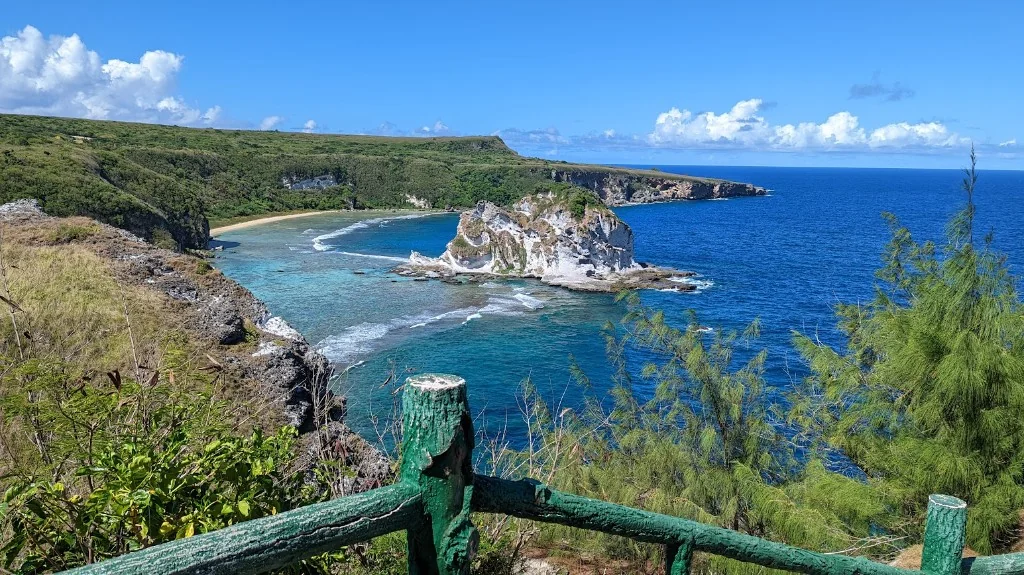
Who It Is Really For
The people I see doing well here are the ones that are ready to stop collecting destinations and start actually living in one.
They work during the day, explore the island in the evenings, and become part of the rhythm of the place instead of passing through it.
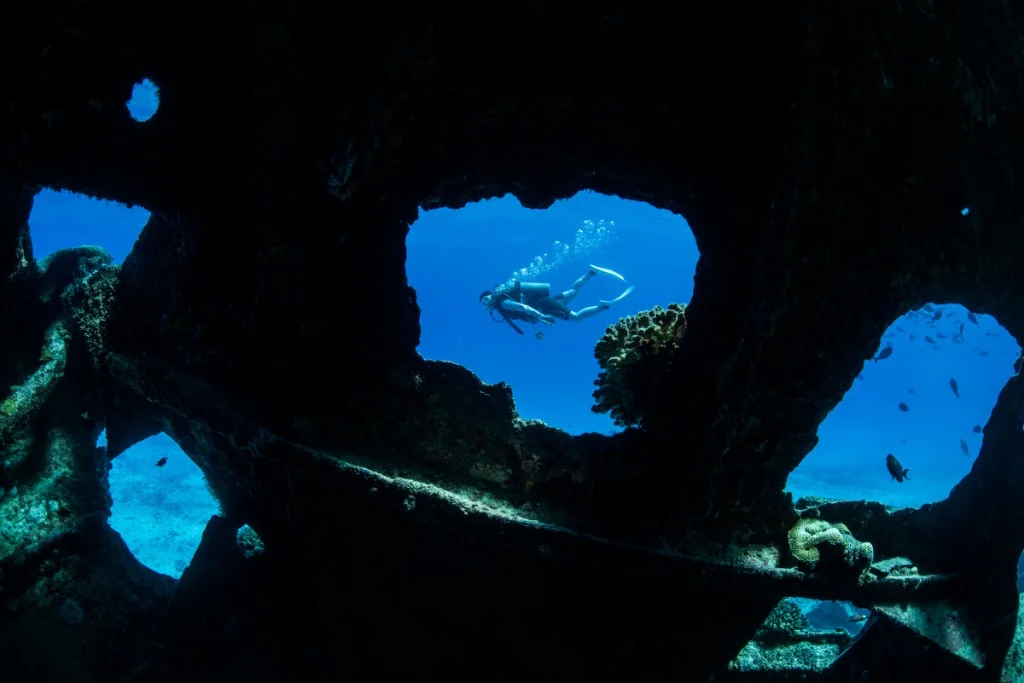
Saipan is not for everyone.
But for remote workers looking for a quieter environment to focus, build projects, and live well, it is worth paying attention to.
The word is starting to get out.
The question is, would you rather arrive now, or after the rest of the world catches on?
About the author
William Davis is a direct response copywriter based on the island of Saipan in the Northern Mariana Islands. He moved there from Charlotte, North Carolina in 2022 and is a co-member of Casa Marianas, the island’s first coliving and coworking space.