
Personal story by Fran
Photographs in this article were provided by the author.
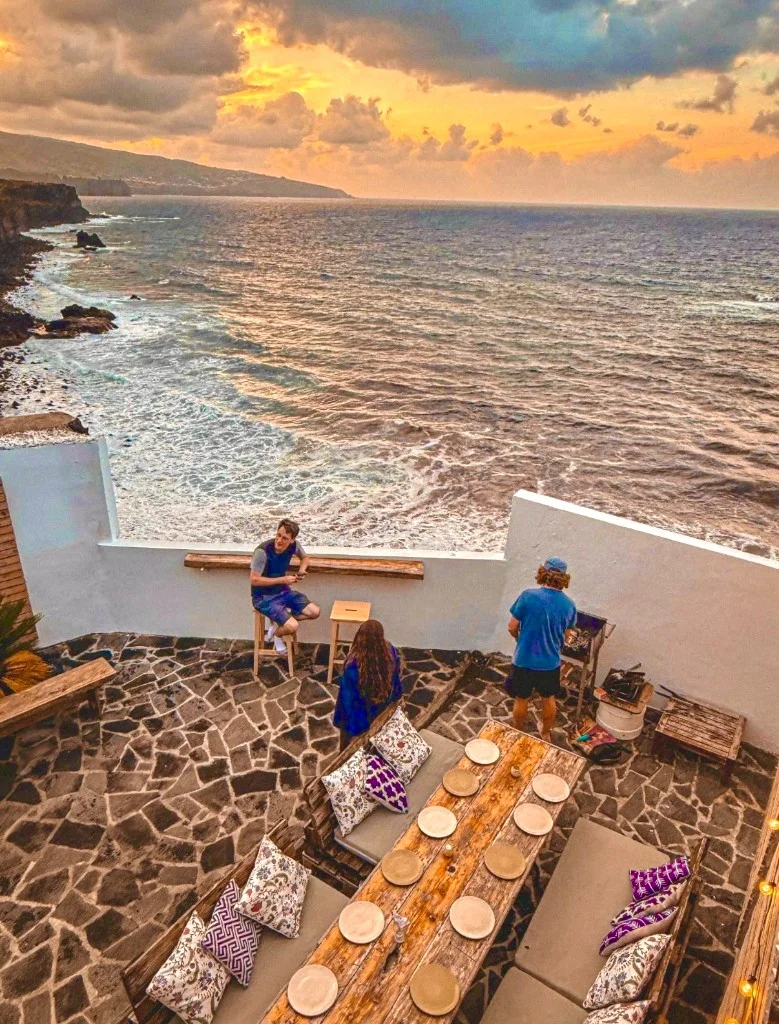
Nestled on an island, over 800 miles away from mainland Portugal, I found myself quite literally working remotely. After having previously navigated bustling Italian cafés to work from, this cliffside retreat overlooking the sea felt like the peaceful work haven I’d been searching for.
A coliving space above the Atlantic
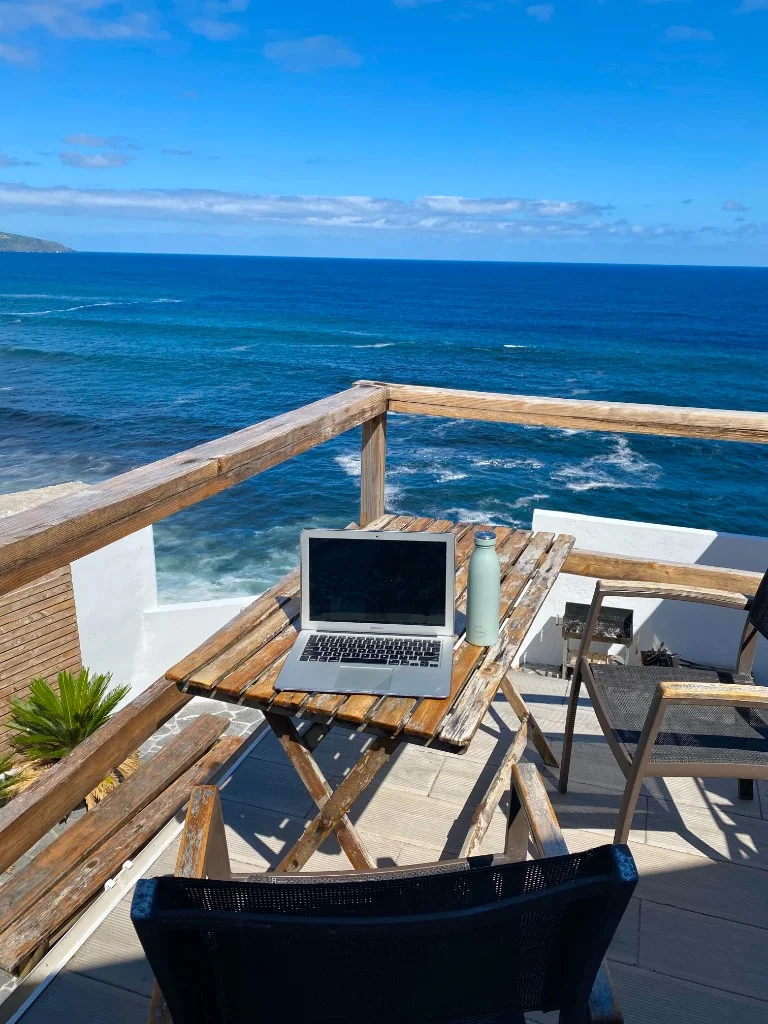
Dwell Azores, a charming coliving and coworking space, is situated on São Miguel, the largest and most populous of the nine islands that make up the volcanic Azores archipelago. It was here, perched on a cliff overlooking the Atlantic, that I found a new kind of remote work sanctuary. It became my base in September last year where I could bask in the golden glow of late-summer sun whilst enjoying the slower rhythm and cheaper off-peak season.
An island built for slow living
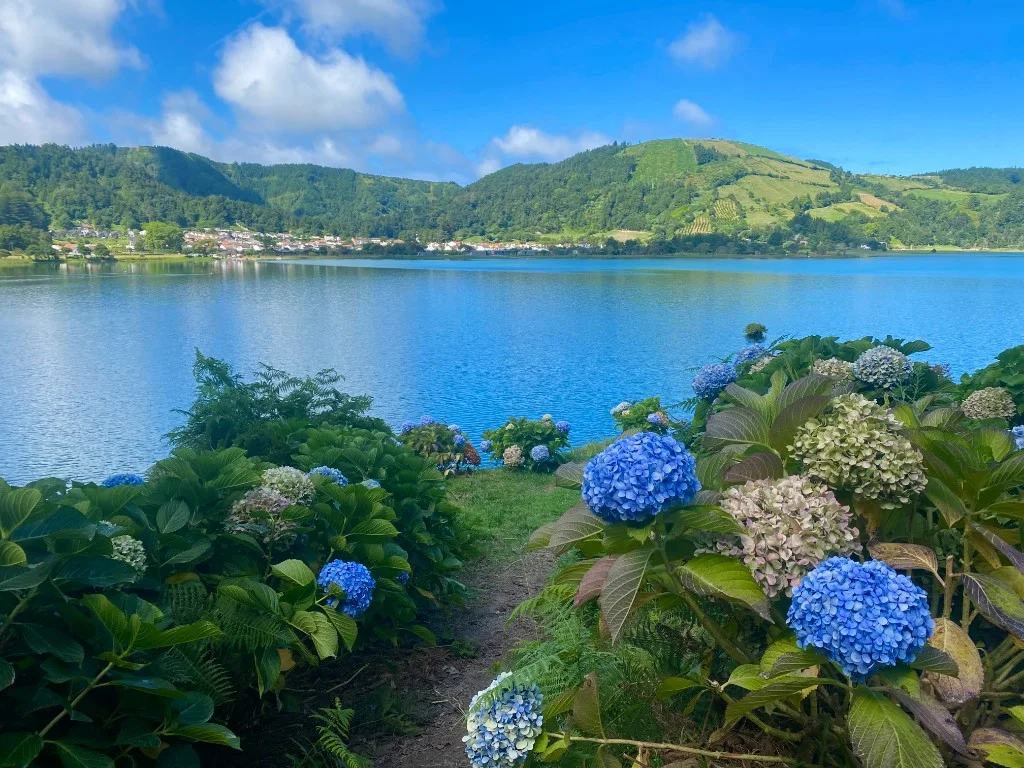
Known as the “Green Island,” São Miguel lives up to its name with a tapestry of lush, unspoiled landscapes. Drives inland revealed new wonders: calderas filled with glassy lakes, valleys carpeted with tea plantations and abandoned buildings slowly reclaimed by roots and vines. The roads themselves were enchanting, framed by flourishing hydrangeas and homes made from basalt volcanic stone and coated in pastel shades. The coastline offered its own magic, from steaming natural rock pools to quaint fishing villages and stretches of surf-ready shoreline. The island offered an ever-changing panorama of experiences with evenings spent trading tips among fellow travellers on hidden treasures yet to be uncovered.
The people you meet while working remotely
The coliving was equally steeped in wonder—a kaleidoscope of nations under one roof. Home to both long and short-term visitors, yet even the briefest of stays left something meaningful behind. Some offered tangible gifts, like a home-cooked meal, while others shared stories and traditions that opened windows into their culture. Though many had travelled from far-flung corners of the world, the spirit of community and the richness of shared experience bound us together. One of my contributions came in the form of Portuguese baked goods—pastéis de nata prepared from scratch. I also organised a communal “bring a fish dish” evening, where the table featured parrotfish and triggerfish freshly speared by a group of us just beyond our doorstep. Dinners often ended with a late-night plunge into the sea, the water lit only by starlight, a quiet reminder of how far we were from anywhere else.
What fascinated me most, however, was hearing how others sustained their travels. Many were software engineers and business owners, but creativity thrived as well. A musician who could switch seamlessly between guitar, keyboard, and saxophone filled countless evenings with impromptu gigs. A novelist, immersed in her manuscript, wandered the island’s old whaling stations as part of her research. Perhaps most memorable of all was the “ethical hacker,” whose work involved breaking into the systems of major corporations, not to exploit, but to protect them from future threats.
Festival season on São Miguel
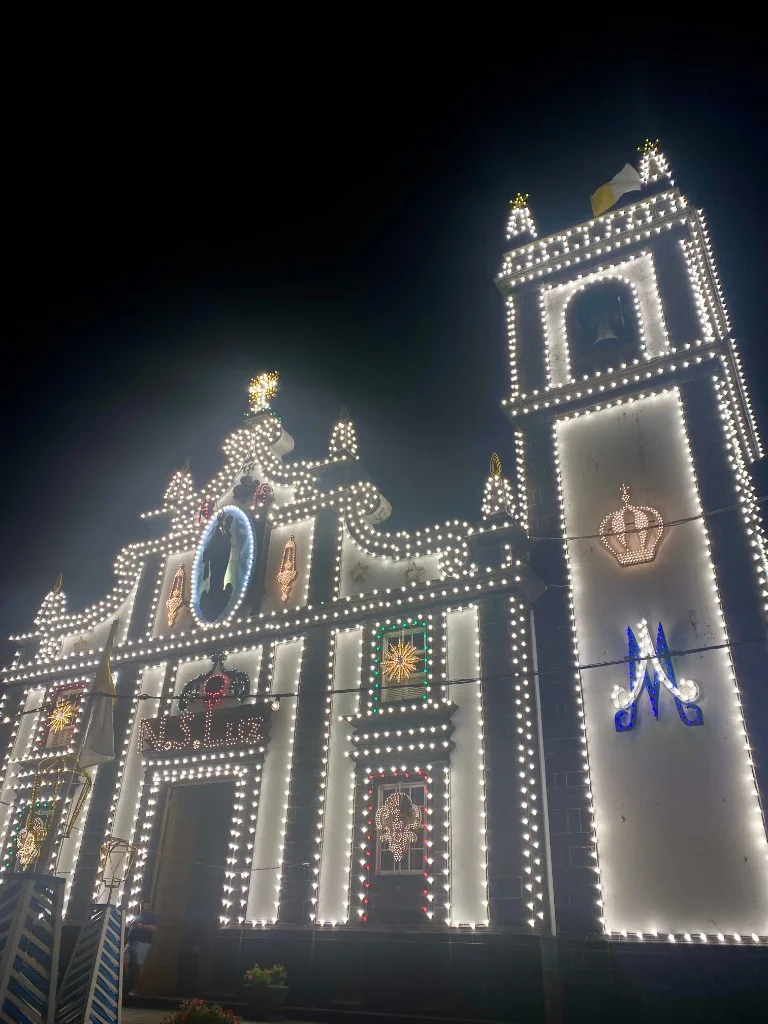
The highlight of island life was the annual religious festival, the Lady of Light, dedicated to the local patron saint. What I had imagined would be a peaceful retreat quickly transformed into ten days of vibrant festivities centred around the village church, just 100 meters from our home. Mornings began with fireworks at 7 a.m., and nights stretched into the early hours with pounding DJ sets. Each day brought its own culinary theme: from a spit-roast feast to an entire evening devoted to soup. For the latter, we were given a wooden board carved with three slots—for a bowl, a dessert, and a glass of wine—perfect for endless rounds of hearty soup. All of this, plus access to 30 soup stalls, cost only €8. Each night, we capped things off with a shot of local honey liqueur and a malassada, a Portuguese doughnut dusted with cinnamon sugar.
The live music was hit-or-miss, often veering into Eurovision territory, but we rarely skipped a night as there was always the chance of stumbling upon something unforgettable.
The local beauty pageant, for example, defied all expectations: the winner, a woman in her seventies, earned her crown not for glamour but for devouring a corn on the cob faster than anyone else. The festival culminated in a breath-taking procession.
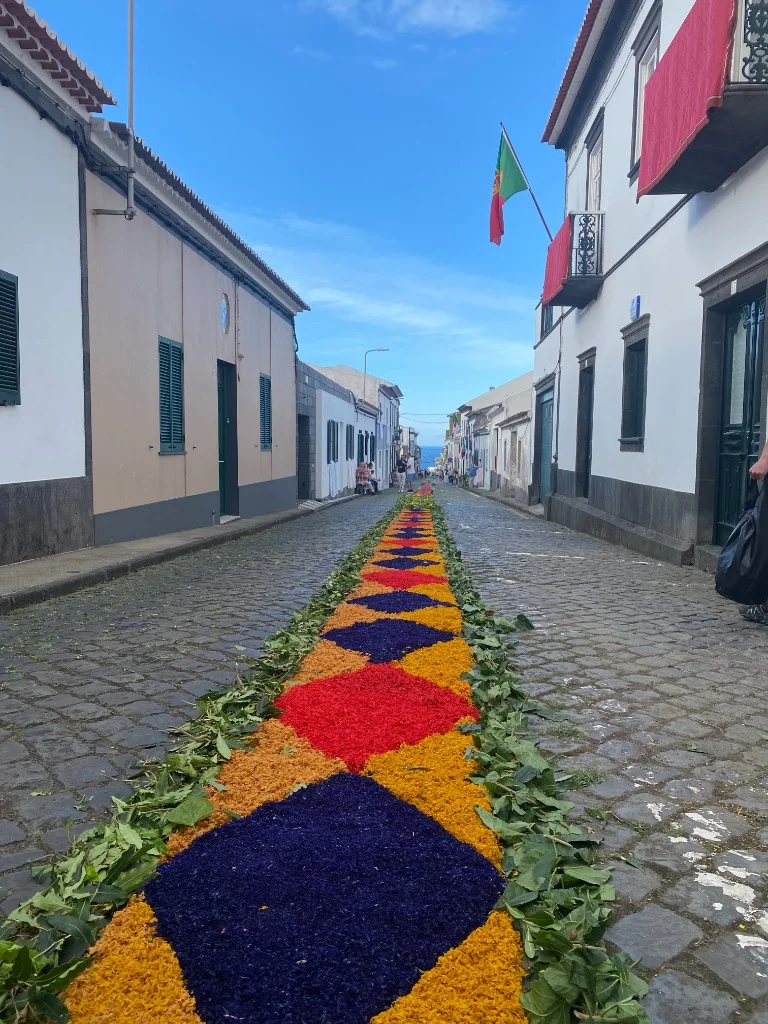
Streets were transformed as locals blanketed the ground with intricate carpets of hydrangeas, roses, lilies, and brightly dyed wood chips. The air was heavy with a floral perfume as marching bands paraded over the vibrant trails.
Remote working in the Azores: what to know before you go
For anyone considering remote work in the Azores, São Miguel offers a good balance of nature and convenience which is ideal for digital nomads looking for a slower, more intentional pace.
A few things that made day-to-day life especially easy:
- Reliable internet: The wi-fi was strong enough for video calls, streaming and full workdays without issue. Storms can occasionally affect island-wide connectivity, but disruptions didn’t happen during my stay. I’d recommend booking somewhere with reliable wi-fi.
- Best time to visit: September felt like a great time to visit. The island was quieter after the peak summer season, accommodation and car prices were lower, and the weather still hovered around a warm 24°C.
- Affordable off-season living: Compared with many European remote-work destinations, the Azores felt refreshingly affordable, especially when sharing accommodation and cooking communal meals.
- Coworking + coliving setup: Dwell Azores blended work and social life naturally. There were dedicated workspaces for focused days, but community dinners and spontaneous adventures made it feel far more personal than a standard coworking hub.
- Car rental is essential: Whilst public transport exists, renting a car quickly became necessary for exploring the island properly. Many of São Miguel’s best spots—crater lakes, hot springs, hiking trails and beaches—are tucked far beyond the main towns. Car sharing was easy to organise when arriving at the coliving.
For remote workers craving both productivity and proximity to nature, the Azores feel wonderfully untapped compared to Europe’s more saturated digital nomad hotspots.
What the Azores taught me about remote work
My time on the island was a very special time of my life. Both the rugged beauty and community have since left an indelible mark on me. It changed the way I think about remote work.
Before arriving, I measured a destination by its practicalities: Wi-Fi speed, coffee shops, cost of living. But island life shifted my focus toward something like community and rhythm.
In the Azores, productivity became secondary to presence. Work still happened, but it unfurled around shared dinners, bathing in hot springs and traditions that pulled people together. The island reminded me that remote work is not only about the freedom to travel, but about creating space for experiences and connections that ordinary routines rarely allow.
Long after leaving, I still think about the hydrangea-lined roads, the midnight swims, and the sound of fireworks echoing across the Atlantic at dawn. Of all the places I’ve worked remotely, nowhere has felt quite so far away, or quite so connected.
About the author
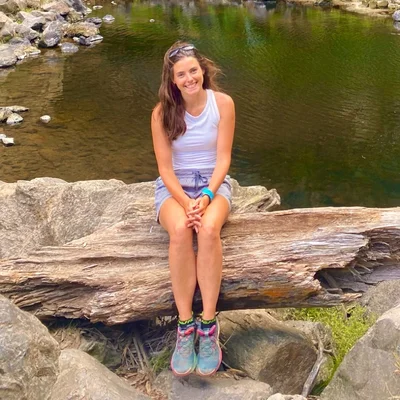
Fran is a UX designer and writer who works remotely across Europe and South Africa in search of the best remote work spots and running trails. She shares her travels as @wild_workspaces on Instagram and is CMO at NAiO, a startup building an all-in-one platform for digital nomads.
Read more of Fran’s travels on Wild Workspaces (Substack).